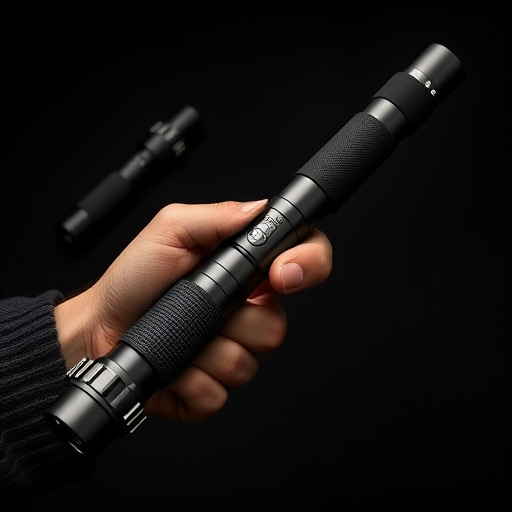
The self-defense telescoping baton is a compact yet powerful tool for personal safety, offering increased reach and striking power in various scenarios from close quarters to long distance. Efficient operation requires optimal posture and balance, with core muscles engaged for control. Mastering footwork techniques like lateral shifts and lunges enhances agility and evasion, while the baton's length acts as a deterrent and provides escape time or neutralization during attacks. Proper use promotes awareness, confidence, and adaptability in high-stress encounters, ensuring mobility and preparedness.
“Unleash the power of self-defense with a comprehensive guide to the telescoping baton. This versatile tool offers a unique advantage for personal safety, especially in close-quarters encounters.
Our article breaks down the essential components of effective baton use, starting with understanding the weapon’s mechanics and its benefits. We explore the art of mastering defensive stances, ensuring optimal protection through balanced posture. Footwork techniques will empower readers to escape and evade, while practical applications demonstrate real-world scenarios where this self-defense telescoping baton can deter and defend.”
- Understanding the Self Defense Telescoping Baton: A Comprehensive Overview
- Mastering the Defensive Stance: Posture and Balance for Maximum Protection
- Footwork Techniques for Effective Escape and Evasion
- Practical Applications: Using the Baton to Deter and Defend in Real-World Scenarios
Understanding the Self Defense Telescoping Baton: A Comprehensive Overview
The self-defense telescoping baton, also known as a collapsible or extendable baton, is a versatile and effective tool for personal safety. Unlike traditional fixed batons, this design allows users to carry a compact device that can quickly transform into a powerful defense mechanism when needed. Its unique telescoping mechanism enables the baton to be easily stowed away in pockets or bags until required, making it an ideal self-defense option for those who prefer to travel lightly but remain prepared.
This type of baton typically consists of multiple sections that slide inside each other, hence the “telescoping” term. When deployed, the baton extends to a specific length, providing a significant reach advantage and increased striking power. The extendable nature makes it suitable for various self-defense scenarios, from close-quarters confrontations to deterring potential attackers at a distance. Understanding how to operate this baton efficiently is crucial, as it offers a level of adaptability that fixed batons cannot match, making it a popular choice among individuals prioritizing both portability and protection.
Mastering the Defensive Stance: Posture and Balance for Maximum Protection
Mastering the defensive stance with a self-defense telescoping baton involves achieving optimal posture and balance for maximum protection. Stand tall with your feet shoulder-width apart, knees slightly bent, and weight evenly distributed. This stability allows you to swiftly react to any threats while keeping your body safe.
Engage your core muscles to enhance your balance and control. Keep your arms relaxed yet ready, with the baton at your side or in a comfortable reach. Maintaining this poised position enables you to effectively utilize the telescoping baton’s full potential during self-defense scenarios, ensuring quick and efficient protection.
Footwork Techniques for Effective Escape and Evasion
In the realm of self defense with a telescoping baton, efficient footwork is your secret weapon. Mastering various techniques allows for swift and effective escape and evasion during potential threats. One powerful method involves using quick, lateral shifts to create distance from an attacker. By swiftly moving your feet in a side-to-side motion, you can gain precious seconds to reevaluate the situation or execute an escape strategy.
Complementing these lateral steps are forward and backward lunges, which not only help maintain balance but also serve as powerful defensive strikes. These dynamic footwork combinations enable you to remain agile, unpredictable, and out of reach while disarming and distracting an aggressor. Practice these techniques to ensure fluidity and naturalness, making them second nature in stressful scenarios.
Practical Applications: Using the Baton to Deter and Defend in Real-World Scenarios
In practical self-defense scenarios, a telescoping baton serves as more than just a tool—it’s a deterrent and a means to gain time for escape or to neutralize an attacker. The baton’s length and reach provide users with an advantage in close-quarters combat, allowing them to keep distance from potential threats. By employing proper footwork, individuals can use the baton defensively to block strikes, push aggressors away, or even control their movements. This tactical tool encourages people to take a proactive stance against danger, promoting awareness and confidence.
Real-world applications demand quick reflexes and strategic thinking. The baton’s versatility enables users to adapt their defensive techniques to various situations, whether disarming an assailant, preventing an attack, or establishing distance during high-stress encounters. Effective footwork enhances these capabilities, ensuring the user remains mobile, balanced, and prepared for any sudden changes in the environment or the attacker’s behavior.
The self-defense telescoping baton is a versatile tool that, when paired with proper technique, can significantly enhance personal safety. By understanding the baton’s mechanics, mastering defensive stances and footwork, and practicing in real-world scenarios, individuals can effectively deter and defend against potential threats. Incorporating these techniques into your repertoire empowers you to stay safe while navigating various environments, making the self-defense telescoping baton a valuable asset for personal security.